
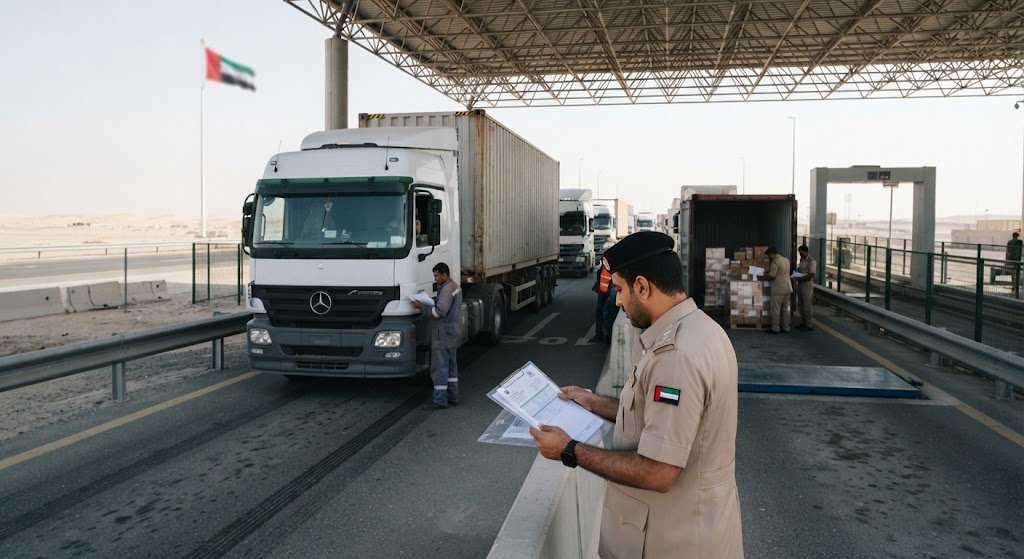
UAE GCC Customs Clearance is an important part of moving commercial and personal cargo from the UAE to Saudi Arabia, Oman, Qatar, Kuwait, and Bahrain. Proper customs documentation helps cargo move through borders with fewer avoidable delays.
The GCC countries have a common customs framework designed to coordinate customs procedures and facilitate trade. However, each shipment can still require country-specific declarations, permits, product documents, and clearance procedures.
Therefore, businesses should prepare their shipment information before the cargo reaches the border.
Pak Ghazi Cargo provides customs clearance assistance as part of its UAE-to-GCC cargo services and handles commercial as well as personal shipments.
What Is UAE GCC Customs Clearance?
Customs clearance is the process of submitting the required shipment information and documents to customs authorities so that cargo can legally move across an international border.
For UAE-to-GCC shipments, this process can involve:
- UAE export customs
- Border documentation
- Transit procedures
- Destination customs
- Import declarations
- Duty and tax assessment when applicable
- Cargo inspection when required
- Final release for delivery
Moreover, the process can differ according to the destination country and cargo type.
For example, cargo traveling from the UAE to Qatar, Bahrain, or Kuwait by road normally passes through Saudi Arabia because these countries do not share a direct land border with the UAE.
UAE to Saudi Arabia Customs Clearance
Saudi Arabia is a major destination for UAE road cargo.
The main UAE-Saudi commercial crossing is the Al Ghuwaifat–Al Batha border. Cargo moving from the UAE to Saudi Arabia needs appropriate export and import documentation before it can proceed through the border.
Common documents can include:
- Commercial invoice
- Packing list
- Certificate of origin
- Export declaration
- Transport documents
- Import documentation
- Product-specific permits when required
For regulated products, additional Saudi requirements can apply. Therefore, businesses should confirm the correct product classification and documentation before dispatch.
UAE to Oman Customs Clearance
UAE-to-Oman cargo can move through several land crossings, depending on the pickup and delivery locations.
Common corridors include:
- Hatta–Al Wajajah
- Al Ain–Mazyad/Hafit
- Khatmat Malaha
- Other suitable border crossings
Customs procedures can include document verification, declaration, scanning, inspection, and cargo release.
Current UAE customs information also describes bonded movements between Oman and the UAE through Al Wajajah and Hatta, with document verification and scanning at the UAE border.
Therefore, customers should provide accurate cargo details before the shipment leaves the UAE.
UAE to Qatar Customs Clearance
Qatar-bound road cargo requires additional attention because the shipment normally travels through Saudi Arabia before entering Qatar.
The route can involve:
UAE → Al Ghuwaifat/Al Batha → Saudi Arabia → Salwa/Abu Samra → Qatar
This means the shipment may need to satisfy transit and destination customs requirements during the journey.
Current freight information confirms that UAE-to-Qatar road cargo uses the UAE-Saudi corridor and requires clearance at the relevant border points.
Therefore, complete documentation is especially important for Qatar-bound road shipments.
UAE to Bahrain Customs Clearance
Bahrain-bound road cargo also normally travels through Saudi Arabia.
The shipment can enter Saudi Arabia through Al Ghuwaifat–Al Batha and then continue toward Bahrain through the King Fahd Causeway.
Consequently, the shipment involves additional transit and border procedures compared with a direct UAE-to-Saudi shipment.
Current UAE inland-freight information identifies clearance at both the UAE-Saudi border and the Bahrain route for UAE-to-Bahrain road cargo.
Businesses should therefore prepare documents before dispatch and confirm the requirements for their particular goods.
UAE to Kuwait Customs Clearance
Kuwait is another major GCC destination for UAE cargo.
Road shipments normally travel through Saudi Arabia before reaching Kuwait. As a result, the shipment requires appropriate transit documentation as well as Kuwait import clearance.
Current freight information lists UAE-to-Kuwait road cargo with clearance at the UAE-Saudi border and additional clearance requirements along the route.
Therefore, customers should provide the final Kuwait delivery address and complete cargo details when requesting a quotation.
Documents Required for UAE GCC Customs Clearance
The exact documents depend on the cargo and destination. However, commercial road shipments commonly require several basic documents.
Commercial Invoice
The commercial invoice provides important information about the shipment, including the seller, buyer, goods, quantities, and declared value.
Packing List
The packing list explains how the cargo is packed. It can include package quantities, weights, dimensions, and descriptions.
Certificate of Origin
A certificate of origin identifies where the goods were manufactured or produced.
Export Declaration
The shipment may require an export customs declaration before leaving the UAE.
Transport Documents
Depending on the shipping method, transport documents can include a road waybill, bill of lading, or air waybill.
Product-Specific Documents
Certain products may require additional certificates, permits, approvals, or inspection documents.
Therefore, businesses should not assume that the same paperwork applies to every shipment.
HS Codes and UAE GCC Customs Clearance
HS codes are used to classify goods for customs purposes.
Correct classification is important because the HS code can affect:
- Customs treatment
- Applicable duties
- Import requirements
- Product restrictions
- Required permits
- Customs declarations
The GCC has moved toward an integrated customs tariff structure using 12-digit HS codes. Dubai Customs states that the updated integrated tariff system was implemented from August 2025 to improve classification accuracy and standardization.
Therefore, businesses should provide an accurate description of the goods instead of using a vague product name.
Customs Duties and Taxes
Customs charges depend on the destination country, product classification, customs value, origin, and applicable trade rules.
The final landed cost may include more than the basic freight charge.
For example, customers may need to consider:
- Customs duties
- Applicable taxes
- Customs processing charges
- Port or border handling
- Documentation fees
- Inspection charges
- Storage charges
- Transportation costs
Therefore, customers should request a complete quotation that clearly explains which customs and logistics charges are included.
UAE Free Zone Cargo and Customs Clearance
Free-zone cargo can have different customs procedures from UAE mainland cargo.
For example, current UAE road-freight information shows that UAE free-zone-origin cargo may require additional clearance from the relevant free zone in addition to border clearance for certain GCC corridors.
Therefore, businesses shipping from JAFZA or another UAE free zone should mention the exact free-zone origin when requesting a customs and freight quotation.
Customs Clearance for Commercial Cargo
Commercial cargo usually requires detailed documentation because the shipment is part of a business transaction.
Examples include:
- Retail inventory
- Machinery
- Spare parts
- Construction materials
- Industrial equipment
- Wholesale products
- Furniture
- Business supplies
Moreover, the invoice and packing list should accurately describe the shipment.
Incorrect descriptions or inconsistent information can create additional customs questions or inspections.
Customs Clearance for Personal Cargo
Personal and household shipments also require accurate cargo information.
Examples can include:
- Furniture
- Clothing
- Household belongings
- Appliances
- Personal items
- Packed boxes
Customers should provide a clear description of the contents.
Furthermore, certain goods may be restricted or require special approval, so customers should disclose the contents before transportation begins.
UAE GCC Customs Clearance for Road Freight
Road freight is widely used for UAE-to-GCC cargo.
The customs process generally involves:
- Cargo pickup
- Document preparation
- UAE export declaration
- Border transportation
- Customs inspection or scanning when required
- Transit procedures
- Destination customs
- Import clearance
- Cargo release
- Final delivery
For Qatar, Bahrain, and Kuwait, Saudi Arabia can form part of the transit route, adding another stage to the overall process.
Therefore, customers should allow enough time for border and customs procedures.
UAE GCC Customs Clearance for Sea Freight
Sea freight involves customs procedures at ports.
Depending on the shipment, the process can include:
- Shipping documentation
- Bill of lading
- Commercial invoice
- Packing list
- Import declaration
- Customs inspection
- Port handling
- Cargo release
For example, current Oman customs requirements include advance electronic manifest procedures for shipping and navigation agents, with a 36-hour pre-arrival submission requirement for certain Omani port cargo effective from May 3, 2026.
Therefore, sea-freight customers should prepare documentation according to the current destination-port requirements.
How to Avoid Customs Clearance Delays
Businesses can take several simple steps to reduce avoidable problems.
Provide Accurate Cargo Descriptions
First, clearly describe the goods on the invoice and packing list.
Use the Correct HS Code
Next, make sure the goods are classified correctly.
Prepare Documents Early
Moreover, complete the required export and import documentation before dispatch.
Check Product Restrictions
Some goods may require permits or special approvals.
Confirm the Destination
Finally, provide the exact delivery country, city, and consignee information.
As a result, the freight provider can prepare the shipment more effectively.
Common Customs Clearance Problems
Several issues can affect cross-border cargo processing.
Incomplete Documents
Missing invoices, packing lists, certificates, or permits can delay clearance.
Incorrect Cargo Description
A vague or incorrect description can lead to additional customs checks.
Incorrect HS Classification
An incorrect HS code can affect customs treatment and may require correction.
Mismatched Information
Differences between the invoice, packing list, declaration, and actual cargo can create problems.
Restricted Goods
Certain products may require additional approval or may not be permitted under standard procedures.
Therefore, customers should provide complete information before cargo pickup.
How Pak Ghazi Cargo Helps with Customs Clearance
Pak Ghazi Cargo provides customs clearance assistance as part of its UAE-to-GCC cargo services.
The company’s current service information states that it assists with customs documentation and clearance for cargo moving across GCC borders. It also provides road, air, and sea freight services to Saudi Arabia, Oman, Qatar, Kuwait, Bahrain, and other GCC destinations.
Its door-to-door service also includes customs documentation and clearance before transportation continues to the final delivery address.
You can learn more about Pak Ghazi Cargo and its GCC cargo services.
UAE GCC Customs Clearance Process
The basic process can be summarized as follows:
1: Share your cargo details.
2: Provide the UAE pickup location and GCC destination.
3: Submit the commercial invoice and packing list.
4: Confirm the cargo classification and required permits.
5: Prepare the UAE export documentation.
6: Complete border or port customs procedures.
7: Complete destination customs clearance.
8: Release the cargo for final transportation.
This process can vary depending on the country, cargo, transport method, and customs procedure.
UAE GCC Customs Clearance for Door-to-Door Cargo
Door-to-door cargo can simplify the shipping process because one logistics provider can coordinate multiple stages.
Pak Ghazi Cargo states that its door-to-door service includes:
- Cargo pickup
- Packing
- Customs clearance
- Road, air, or sea transportation
- Final delivery
Therefore, businesses and individuals can provide their shipment information to one freight provider rather than arranging each stage separately.
Get UAE GCC Customs Clearance Assistance
If you need customs clearance for a UAE-to-GCC shipment, prepare these details:
- UAE pickup location
- Destination country
- Destination city
- Cargo description
- Number of packages
- Total weight
- Package dimensions
- Commercial invoice
- Packing list
- Certificate of origin, when applicable
- Any required product permits
Once these details are available, the freight provider can review the shipment and explain the applicable customs process.
For UAE GCC Customs Clearance assistance, contact Pak Ghazi Cargo through WhatsApp or call +971 55 640 2772.
Conclusion
UAE GCC Customs Clearance is an important part of moving cargo from the UAE to Saudi Arabia, Oman, Qatar, Bahrain, and Kuwait.
Although GCC countries operate under a common customs framework, individual shipments can still require different declarations, permits, product documents, and border procedures.
Moreover, Qatar, Bahrain, and Kuwait road shipments normally involve Saudi Arabia as a transit country, while Saudi Arabia and Oman have direct land connections with the UAE.
Therefore, accurate cargo descriptions, correct HS classification, complete documents, and proper customs preparation are important for smoother cross-border transportation.